Safety Systems Depend on Precise Alignment
ADAS Calibration in Garner and Raleigh for vehicles requiring camera and sensor recalibration after windshield replacement or collision repair
Lane departure warnings that trigger incorrectly, automatic braking that fails to activate, or dashboard error lights that won't clear often indicate that your vehicle's advanced driver assistance systems have lost their calibration reference points. When the windshield comes out during replacement, the camera mounted behind the glass loses its alignment to the road ahead, and even a shift of a few millimeters changes where the system thinks the lane lines and obstacles are located. American Auto Glass performs ADAS calibration using equipment that re-establishes the precise angles and distances these systems need to function as the manufacturer intended, particularly for newer vehicles common in high-traffic areas around Garner and Raleigh where these features actively engage during daily driving.
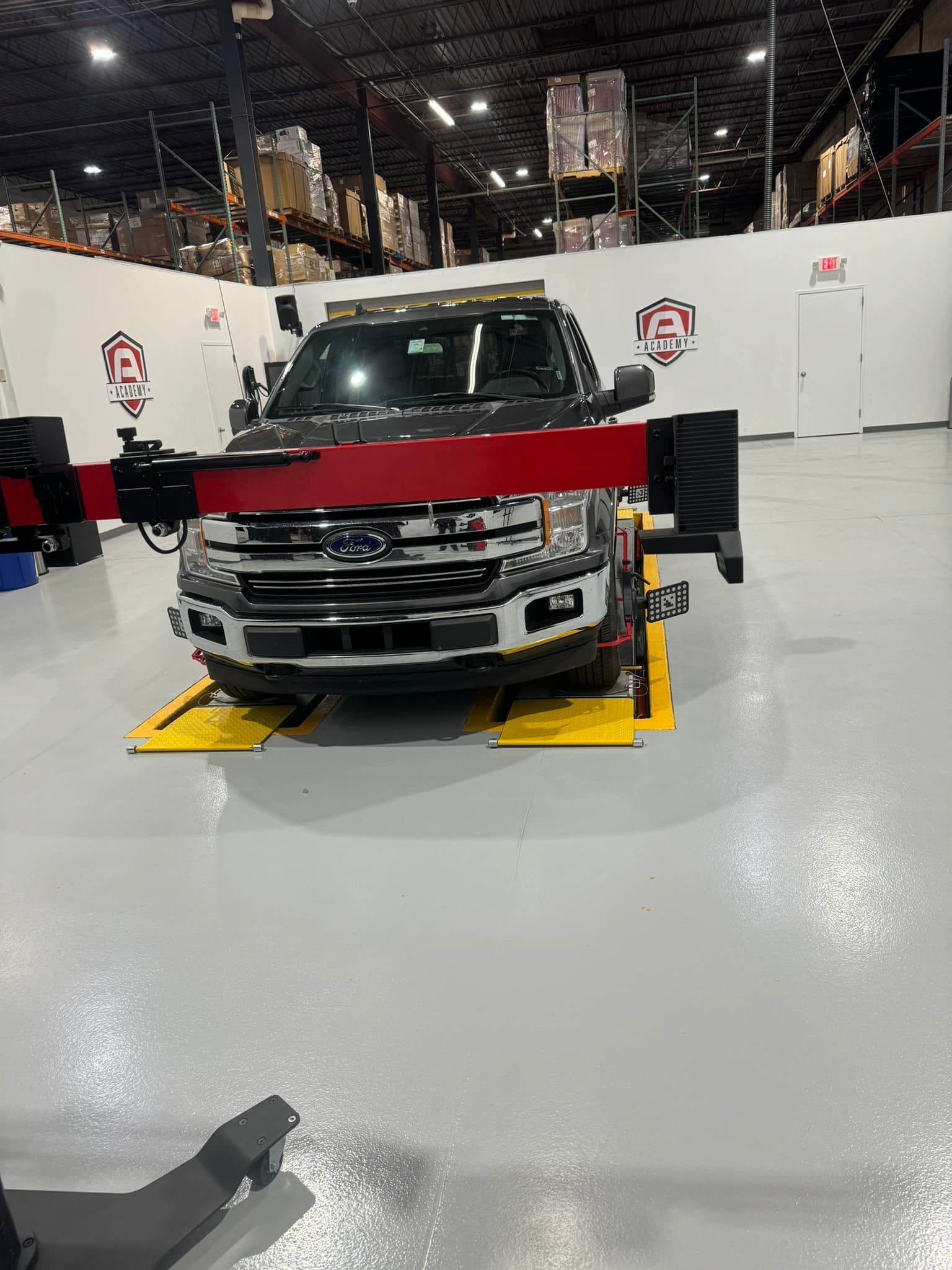
Calibration requires positioning the vehicle on a level surface, placing targets at exact distances in front of or around the car, and running diagnostic software that adjusts the camera's field of view and the radar sensor's detection zones until they match factory specifications. Skipping this step leaves systems that either fail to activate when needed or trigger false warnings that drivers learn to ignore, both of which defeat the purpose of installing the technology.
Arrange calibration service directly following your windshield replacement to restore full system functionality before returning to regular driving.
Why Camera Positioning Affects System Performance
The camera uses the windshield glass as a reference plane, and when a new windshield is installed, slight variations in glass thickness, mounting bracket position, or adhesive bead height change the angle at which the camera views the road. Trained technicians use targets placed at measured distances—often 16 feet or more in front of the vehicle—and run calibration routines that adjust the software's interpretation of the camera feed until the system correctly identifies lane markings, vehicles, and pedestrians at the proper distances.
Once calibration completes, your vehicle will correctly judge the distance to the car ahead, activate collision warnings at appropriate thresholds, and keep lane-keeping assist centered without drifting toward one side. The dashboard warning lights tied to these systems will clear, and the features will respond predictably without false alarms or delayed activation.
This service applies specifically to vehicles equipped with forward-facing cameras, radar units, or LIDAR systems, and does not cover general diagnostics unrelated to glass or sensor positioning. Some vehicles require static calibration performed in a shop, while others need dynamic calibration that involves driving the vehicle through specific maneuvers, and the approach depends on the make, model, and system architecture your car uses.
Questions That Come Up About Calibration
Drivers often have concerns about when calibration is required and what happens if it's skipped after glass work.
How do you know if your vehicle requires calibration after windshield replacement?
If your car has a camera mounted behind the rearview mirror, displays icons for lane assist or collision warning on the dashboard, or shows a warning light indicating a system fault after the glass was replaced, calibration is necessary to restore proper operation.
What happens if you drive without recalibrating the system?
The vehicle may fail to detect obstacles in time, steer incorrectly during lane-keeping intervention, or trigger warnings when no hazard exists, all of which reduce the effectiveness of safety features and can create dangerous situations if you rely on them during highway driving around Garner and Raleigh.
How long does the calibration process take?
Static calibration typically requires 30 minutes to an hour depending on the number of systems involved, while dynamic calibration may add a short test drive to complete the process and confirm that all sensors are reading correctly.
Why does calibration require specialized equipment?
The targets must be placed at exact heights and distances with no deviation, and the software needs to communicate directly with the vehicle's onboard computer to adjust parameters that are not accessible through standard scan tools or manual adjustments.
What should you check to confirm calibration was done correctly?
Verify that all dashboard warning lights related to safety systems have cleared, that lane-keeping assist responds smoothly without pulling to one side, and that automatic braking activates at consistent distances when tested in a controlled environment.
American Auto Glass schedules calibration immediately after glass replacement to meet manufacturer safety standards and prevent system errors from persisting. Contact the shop to confirm your vehicle's calibration requirements and book the service as part of your windshield work.